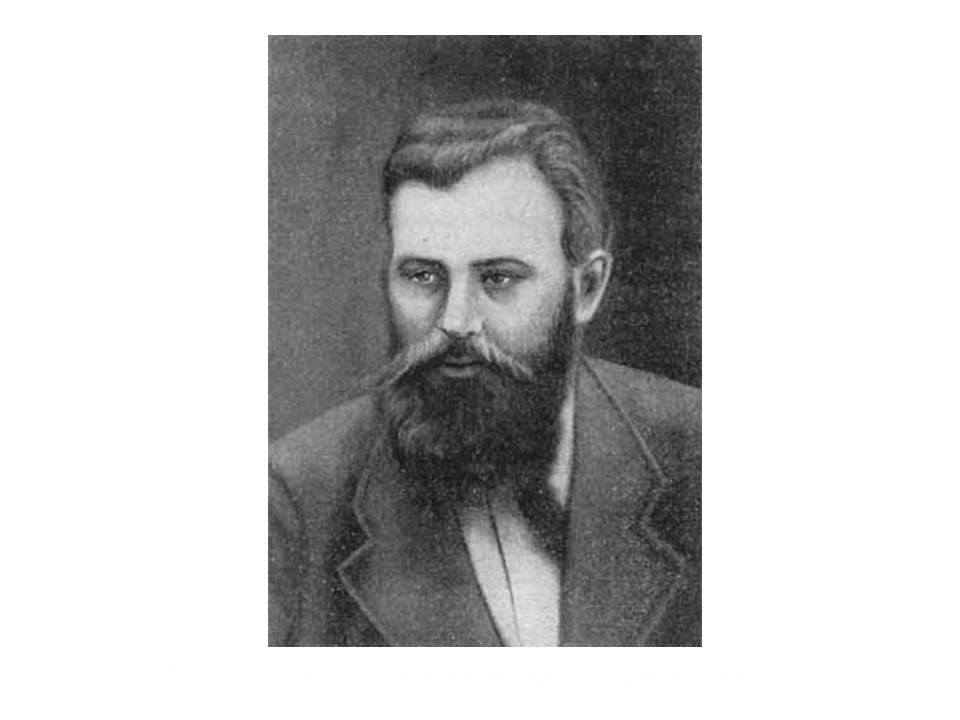
Vasily Vasilyevich Dokuchaev (1846–1903) was a scientist whose research completely transformed our understanding of soil. Previously regarded simply as “ground,” soil, thanks to Dokuchaev, came to be understood as a complex natural formation with its own structure and history of development.
Dokuchaev was born into a priest’s family and began his education at a seminary, where he earned the nickname “Bashka” (“Brain”) because he was the top student. However, in 1867, he became fascinated with science and enrolled at Saint Petersburg University.
Between 1871 and 1877, expeditions were conducted across various regions of Russia and parts of Finland, and later in Crimea, the North Caucasus, Poltava, and Nizhny Novgorod. From that time onward, he devoted himself to field research. The scientist spent countless hours studying soils in different regions of Russia and Central Asia.
It is important to note that the results of his scientific work were summarized in his doctoral dissertation, Russian Chernozem. In his subsequent works, Dokuchaev described the principles governing the origin and stages of soil development, as well as its dependence on natural conditions. These ideas were important not only for geology, but also for ecology, geography, and agriculture.
Dokuchaev was born into a priest’s family and began his education at a seminary, where he earned the nickname “Bashka” (“Brain”) because he was the top student. However, in 1867, he became fascinated with science and enrolled at Saint Petersburg University.
Between 1871 and 1877, expeditions were conducted across various regions of Russia and parts of Finland, and later in Crimea, the North Caucasus, Poltava, and Nizhny Novgorod. From that time onward, he devoted himself to field research. The scientist spent countless hours studying soils in different regions of Russia and Central Asia.
It is important to note that the results of his scientific work were summarized in his doctoral dissertation, Russian Chernozem. In his subsequent works, Dokuchaev described the principles governing the origin and stages of soil development, as well as its dependence on natural conditions. These ideas were important not only for geology, but also for ecology, geography, and agriculture.
Dokuchaev also proposed a number of measures to combat drought. Forest shelterbelts such as the Tersinskaya and Tarapatinskaya belts and the Kozlovskaya Watershed Forest Belt were established.
Following the study of the Kamennaya Steppe and the implementation of a comprehensive set of measures for conservation and sustainable natural resource management, the idea of establishing nature reserves in areas untouched by agriculture also emerged.
V. V. Dokuchaev’s ideas went far beyond the field of soil science — they influenced geography, ecology, and forestry. His research, expeditions, and scientific works, including the establishment of the first Department of Soil Science, helped shape a scientific school and laid the foundations for principles of nature conservation.
Following the study of the Kamennaya Steppe and the implementation of a comprehensive set of measures for conservation and sustainable natural resource management, the idea of establishing nature reserves in areas untouched by agriculture also emerged.
V. V. Dokuchaev’s ideas went far beyond the field of soil science — they influenced geography, ecology, and forestry. His research, expeditions, and scientific works, including the establishment of the first Department of Soil Science, helped shape a scientific school and laid the foundations for principles of nature conservation.